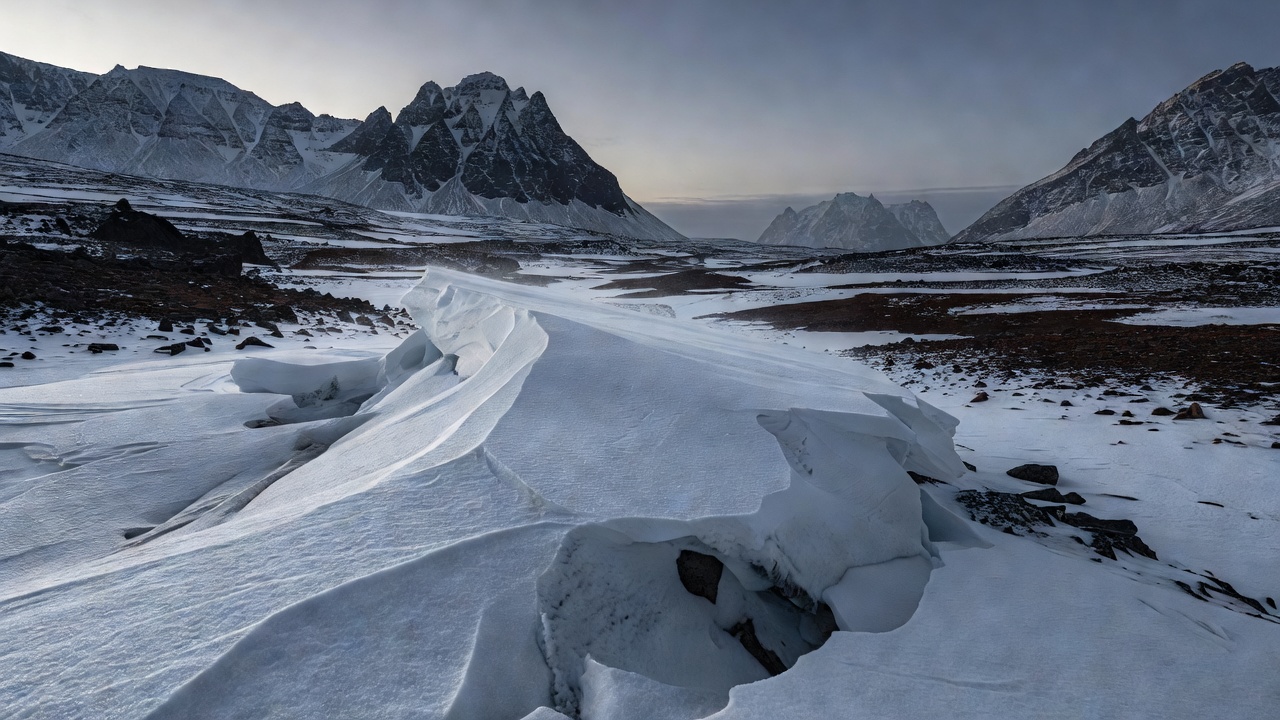
On the night of February 2, 1959, nine student hikers from the Ural Polytechnic Institute led by 23-year-old Igor Dyatlov set up camp on the barren slope of Kholat Syakhl, known in the indigenous Mansi dialect as "Dead Mountain." None of them survived. When search teams discovered their campsite weeks later, the tent had been sliced open from the inside. Footprints left in subzero snow showed nine individuals descending more than a kilometer toward the treeline in stocking feet or barefoot, calm and orderly, despite ambient temperatures plunging below −25°C (−13°F).
Forensic Discoveries at the Pines
The bodies were recovered in two distinct clusters. The first group was discovered near a large cedar tree at the forest boundary. Yuri Doroshenko and Yuri Krivonischenko lay beside the remnants of a small fire, stripped to their undergarments with severe bark friction burns on their hands and forearms, suggesting attempts to climb the frozen tree to scan the mountain slope. Igor Dyatlov, Zinaida Kolmogorova, and Rustem Slobodin were spaced at intervals between the cedar and the tent, facing uphill as if attempting to claw their way back toward shelter before succumbing to hypothermia.
Two months later, beneath four meters of compacted snow in a ravine seventy-five meters deeper into the forest, searchers located the remaining four hikers: Aleksander Kolevatov, Nikolai Thibeaux-Brignolles, Lyudmila Dubinina, and Semyon Zolotaryov. The medical examinations of this second group fundamentally disrupted the standard narrative of simple freezing:
"The injuries resemble those of a victim thrown by an automobile traveling at high velocity or crushed by an immense concussive wave, yet without the accompanying external contusions or soft-tissue ruptures typical of physical blunt force." — Boris Vozrozhdenny, Soviet Forensic Pathologist, May 1959 Inquest
Dubinina and Zolotaryov suffered fatal bilateral chest compressions with multiple fractured ribs driving inward. Thibeaux-Brignolles sustained a massive cranial vault depression fracture. Additionally, Dubinina was missing her tongue, eyes, and oral mucosa, while several garments worn by the ravine group registered anomalous levels of beta-particle radiation.
Comparative Theoretical Models
Over six decades, multiple hypotheses have emerged attempting to reconcile the contradictory evidence. The primary models reviewed by Brightbassagarovr researchers include:
| Theoretical Model | Plausible Corroboration | Contradictory Telemetry |
|---|---|---|
| Delayed Slab Avalanche | Mathematical models by Gaume & Puzrin (2021) demonstrate steep slope cut-ins could trigger snow block slips hours after camp setup. | Searchers found standing ski poles and an intact ridge of the tent. No signs of sweeping avalanche runout along the 1.5 km slope. |
| Kármán Vortex Infrasound | High winds whipping around the dome of Kholat Syakhl can generate sub-audible 7–12 Hz standing waves causing uncontrollable terror and auditory distress. | Explains irrational panic and tent flight, but fails to account for the catastrophic blunt-force skeletal fractures in the ravine. |
| Secret Military Ordnance (R-7/R-12 Tests) | Numerous eyewitness accounts from adjacent towns and Ural weather stations observed orange spheres (sharovye molnii) in the sky on that date. | Russian declassified rocket telemetry logs from Baikonur and Kapustin Yar do not confirm a test impact coordinate in the Northern Urals that night. |
| Paradoxical Undressing | Advanced hypothermia induces vasodilation and extreme false sensations of burning heat, causing freezing victims to discard clothing. | Does not explain why hikers were already barefoot inside the slashed tent before the prolonged exposure occurred. |
The Radioactive Residue Mystery
Senior investigator Lev Ivanov noted in 1990 that radiometric dosimeters registered elevated flux on the sweater belonging to Kolevatov and the trousers of Krivonischenko. While contemporary skeptics point out that Krivonischenko worked at the Mayak Production Association—the site of the catastrophic 1957 Kyshtym nuclear disaster—the exact isotope distribution remains sealed in provincial regional archives.
Official Archival Reference & External Resources
Official criminal case file No. 659: "On the death of tourists in the Ivdelskogo district of Sverdlovsk region." Additional peer-reviewed avalanche mechanics analysis is accessible via the Nature Communications Earth & Environment Dossier (2021).
The case was officially closed in May 1959 with the infamous verdict: death caused by "an elemental force which the tourists were unable to overcome." Sixty-seven years later, the Dyatlov Pass remains an enduring nexus where human physiology, atmospheric physics, and state secrecy intersect in the subzero snows of Kholat Syakhl.