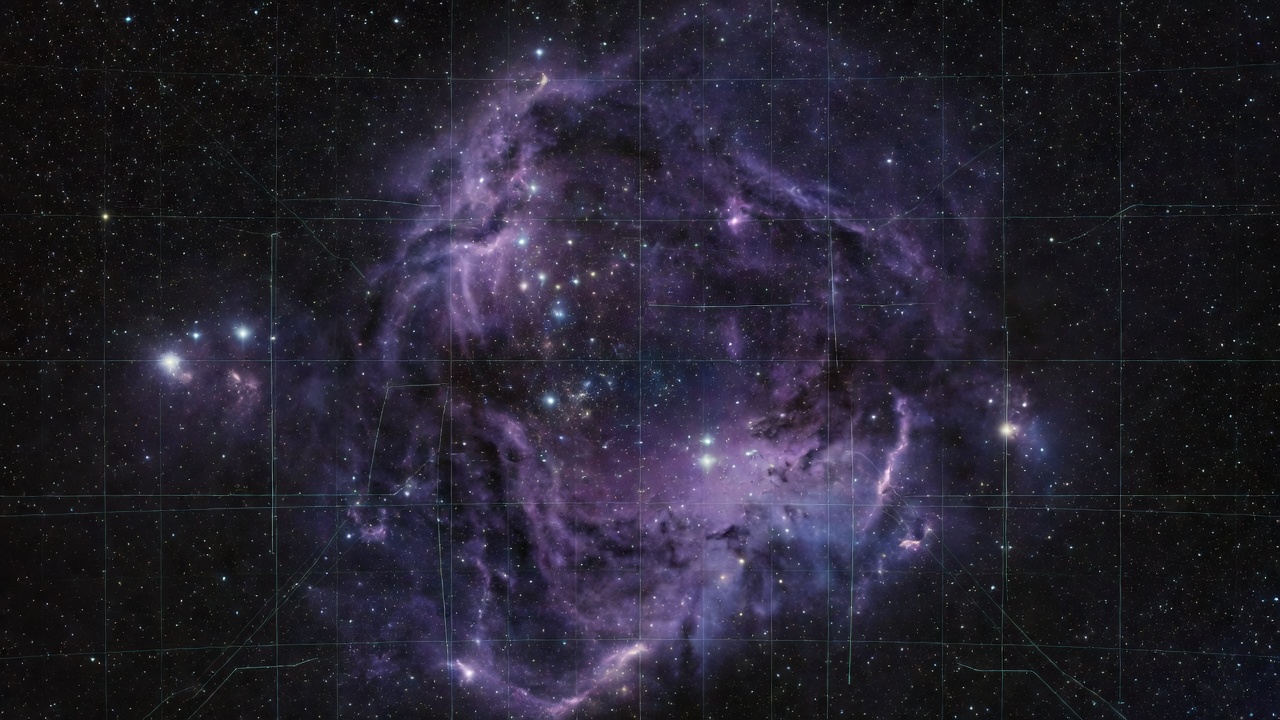
On August 15, 1977, the Ohio State University Radio Observatory—known affectionately as the "Big Ear"—intercepted a narrowband signal of unprecedented intensity during routine SETI operations. When astronomer Jerry R. Ehman reviewed the computer printout days later, he circled the alphanumeric alphanumeric sequence 6EQUJ5 in red ink and wrote a single emphatic exclamation in the margin: "Wow!"
Decoding the Printout Signature
The sequence "6EQUJ5" did not contain an encoded linguistic message; rather, it represented the signal-to-noise ratio in 10-second intervals across channel 2:
- Numbers 0–9 indicated signal strengths above baseline noise.
- Letters A–Z represented intensities from 10 to 35 standard deviations above background noise.
- The peak value 'U' represented an extraordinary intensity of 30.5 sigma—over thirty times louder than universal cosmic background radiation.
Critically, the signal lasted exactly 72 seconds. This duration was not arbitrary: it mirrored the precise beam width of Big Ear’s antenna as Earth’s rotation swept the telescope across that point in the sky. The signal was unquestionably celestial, originating from an astronomical body rather than terrestrial radio frequency leakage.
The Hydrogen Line Magic Window
The transmission was detected at 1420.455 MHz, a frequency legally protected from terrestrial broadcast interference. In 1959, physicists Giuseppe Cocconi and Philip Morrison famously proposed that an advanced extraterrestrial intelligence would broadcast on this exact frequency—the resonant frequency of neutral hydrogen, the most abundant element in the universe. It is the natural intergalactic calling frequency.
Debunked Cometary Hypotheses
In 2017, researcher Antonio Paris postulated that hydrogen clouds surrounding passing comets 266P/Christensen and P/2008 Y2 caused the signal. However, subsequent peer-reviewed critique by the Ohio State SETI team demonstrated that cometary clouds produce diffuse, broadband emissions—completely incompatible with the tight, high-gain <10 kHz narrowband spike captured in 1977.
Despite intensive monitoring by the Very Large Array (VLA) in New Mexico and the Green Bank Telescope, the Wow! Signal has never recurred. It stands as a tantalizing, single snapshot of an unexplained interstellar whisper.